One of the last primary rainforests in West Africa, and a UNESCO World Heritage site.
Taï protects the largest remaining block of primary rainforest in West Africa. The region was almost entirely cleared for cocoa and timber over the last century; what survives inside the park boundary gives an idea of what the whole south-west looked like before. UNESCO listed it in 1982.
It is best known for its chimpanzees, studied here for decades and observed using stones to crack nuts — one of the clearest cases of tool use in wild primates. But the forest itself is the experience: closed canopy, enormous buttressed trunks, and a soundscape that never stops. Visits are guided, groups are small, and permits are arranged well in advance.
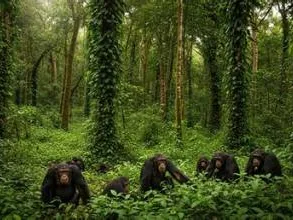
Habituated groups can sometimes be tracked with researchers and guides. Sightings are never guaranteed, and anyone who promises you otherwise is selling something.
Closed canopy, buttress roots, lianas, and a permanent green half-light. Even without a single large animal, the walk is the point.
Taï is one of the last strongholds of this rare, nocturnal and extremely shy species. Tracks and traces are far more likely than a sighting.
Hornbills, turacos, greenbuls — the forest bird list is long and includes species found nowhere else in the region.
One of the largest protected areas in West Africa: savanna, gallery forest and a great river.
ExploreThousands of hectares of rainforest inside the city — half a day, no travel required.
ExploreA national park of lagoon islands: mangrove, water birds, and islets held sacred.
ExploreSend us your dates and what you want out of the trip. We reply with a route, a price and the names of the people who will meet you.
Contact us